
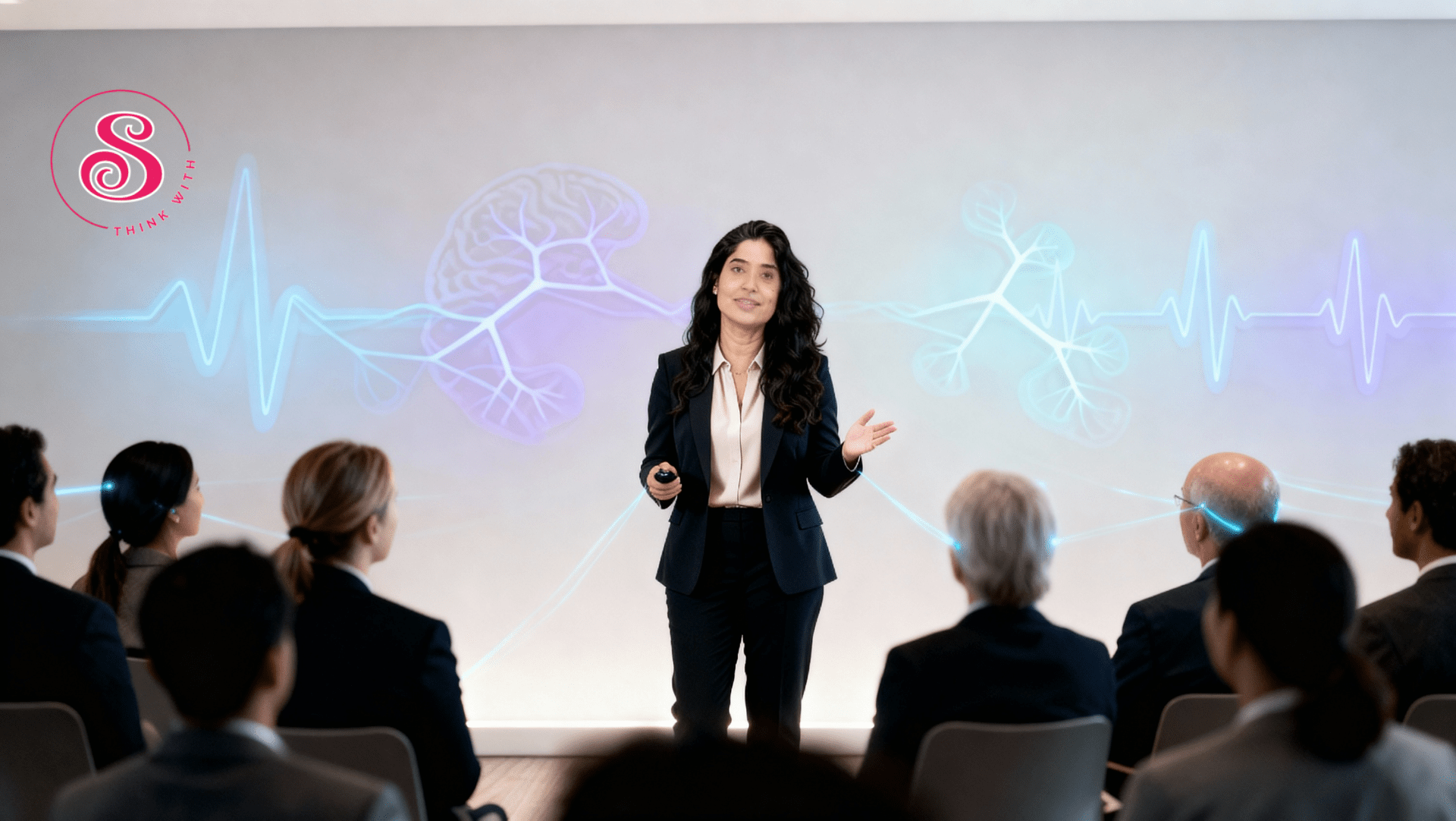
Stella Collins’ Neuroscience for Learning and Development is the definitive scientific playbook for trainers, L&D professionals, educators, and corporate learning leaders. This practical guide translates cutting-edge brain science into actionable strategies for designing training that actually sticks—whether in-person, virtual, or hybrid. With the rise of AI-driven learning and lifelong upskilling demands, Collins’ evidence-based tools help create high-ROI programs that boost retention by up to 70%.
Why This Book Dominates L&D Training
The updated edition tackles modern challenges like Zoom fatigue, neurodiversity, and “learning in the flow of work.” Collins debunks neuromyths while introducing the GEAR model (Guide, Experiment, Apply, Retain) for measurable outcomes. Perfect for finance/ML educators, corporate workshop facilitators, and MBA instructors seeking science-backed engagement over slide decks.
1. Why Neuroscience and Learning are Good Companions
Neuroscience proves learning physically rewires the brain through neuroplasticity, creating new neural pathways during training. This cellular-level change explains why active practice outpaces passive listening by 5x in retention. Trainers leverage this by designing sessions with deliberate repetition and real-world application from day one.
Traditional “sage on stage” lectures fail because they ignore synaptic strengthening. Collins shows how spaced repetition and emotional engagement trigger long-term potentiation (LTP), the brain’s memory “superhighway.” Start every program with hands-on challenges to activate these mechanisms immediately.
2. The Science of Your Brain
The brain’s 86 billion neurons communicate via synapses, forming networks that underpin skills and habits. Neuroplasticity allows adults to rewire just like children, debunking the “use it or lose it” myth completely. Understanding prefrontal cortex (planning) vs amygdala (emotions) helps trainers sequence content for maximum absorption.
Glial cells support 10x more connections than neurons, regulating focus and recovery. Mirror neurons fire during observation, explaining why live demos accelerate skill transfer. Apply by pairing theory with immediate modeling in every module.
Blood flow, oxygen, and glucose dictate cognitive stamina—multitasking drops performance 40%. Hydration breaks and movement restore executive function mid-session. Collins provides brain anatomy visuals for instant trainer credibility.
3. What to Do When Someone Says ‘Neuroscience Doesn’t Work’
Skeptics cite discredited “learning styles” myths; Collins separates pseudoscience from validated practices like retrieval practice. Evidence shows 10-minute active recall boosts retention 50% over rereading. Counter objections with simple A/B tests during workshops.
Corporate doubters demand ROI—present studies showing neuroscience-trained teams 25% faster at complex tasks. The book equips you with peer-reviewed references and quick experiments. Build trust through transparent “try it now” demos that deliver instant results.
4. Neuroscience and Emotions
Amygdala hijacks learning under stress, blocking hippocampus memory formation entirely. Positive emotions flood dopamine, extending attention spans 3x longer naturally. Use storytelling and micro-wins to create safety signals from session start.
Emotional tagging makes facts memorable—fearful memories last decades, joyful ones compound virally. Collins’ emotion wheel helps trainers diagnose group moods real-time. End every module with celebratory reflection to seal neural connections.
Also read: Thinking in Bets: What Poker Teaches Us About Decision-Making
5. The Neuroscience of Attention
Default Mode Network activates during mind-wandering, consuming 47% of workday attention. Pomodoro cycles (25-min focus + 5-min break) restore via neurochemical resets. Gamification with leaderboards sustains engagement 4x longer than lectures.
Multisensory inputs compete for limited bandwidth—visual dominance eats 65% capacity. Alternate modalities every 10 minutes to prevent cognitive fatigue. Virtual reality boosts attention 30% through immersive embodiment.
6. The Neuroscience of Memory
Hippocampus consolidates declarative memory during REM sleep cycles overnight. Encoding fails without multisensory repetition—seeing + doing + saying triples retention. GEAR’s “Retain” phase uses spaced quizzes at 1-day, 1-week, 1-month intervals.
Working memory holds 7±2 items; chunking expands this to 20+ via pattern recognition. Storytelling compresses complex info into narrative hooks. Sleep deprivation post-training cuts transfer 60%—schedule follow-ups accordingly.
7. Neuroscience, Motivation and Habits
Dopamine loops cement habits; variable rewards (like slot machines) hook learners fastest. Intrinsic goals (mastery) sustain 5x longer than extrinsic (bonuses). Micro-habits under 2 minutes bypass procrastination entirely.
Nucleus accumbens tracks progress toward goals—celebrate 1% improvements visibly. Collins’ habit stacking pairs new skills with existing routines. Track streaks publicly to leverage social commitment effects.
8. Neuroscience and Sleep
Sleep spindles replay daytime learning 20x during stage 2 NREM, strengthening pathways. Chronic deprivation equals 0.05% BAC impairment per hour missed. Post-training naps boost consolidation 30%—build 20-min breaks into long programs.
Circadian dips kill afternoon retention; schedule high-cognition tasks pre-lunch. Blue light disrupts melatonin 3 hours pre-bed—advise no screens post-8 PM for leaders. Weekend catch-up sleep fails; consistent 7-9 hours compounds weekly.
9. The Neuroscience of Learning Environments
Natural light elevates serotonin 25%, cutting fatigue 40%. Plants reduce CO2, improving decisions 15%. Cluttered visuals trigger amygdala overload—white space rules apply to slides too.
Temperature sweet spot: 69-72°F maximizes working memory. Scented oils (rosemary for recall) enhance 20% via olfactory bulb direct amygdala links. Hybrid rooms need equal sightlines to prevent exclusion bias.
10. Using Neuroscience for Virtual and Digital Learning
Microlearning doses under 6 minutes match dopamine half-life perfectly. AI personalization adapts to real-time attention via eye-tracking. VR embodiment transfers motor skills 75% better than 2D video.
Platform fatigue from context-switching costs 23 workday minutes per hour. Asynchronous nudges via mobile beat live Zooms for retention. Gamified badges trigger serotonin loops across distributed teams.
11. Creating an Autonomous Learning Culture
“Flow of work” learning integrates 15-min modules into workflows, capturing 80% more application time. Nudge theory via email prompts doubles completion rates organically. Open University’s 70% uplift proves self-directed scales enterprise-wide.
Psychological safety via anonymous sharing unlocks 3x knowledge flow. AI coaches provide instant feedback loops mimicking human mentors. Measure via pre/post neural activation scans for C-suite buy-in.
Book link: https://amzn.to/4jOyOBV